Virtual reality trends 2026 point toward a major shift in how people work, play, and connect. The technology has moved past its early hype phase. Now, practical applications are driving real adoption across industries. Headsets are lighter. Graphics are sharper. And AI is making virtual worlds smarter than ever.
This year will bring hardware improvements, new social platforms, and expanded uses in healthcare and business. Whether someone is a developer, investor, or curious consumer, understanding these virtual reality trends matters. Here’s what to expect from VR in the year ahead.
Table of Contents
ToggleKey Takeaways
- Virtual reality trends 2026 focus on lighter headsets, 4K+ displays per eye, and pancake lenses that reduce device weight by 30-40%.
- AI-powered NPCs and procedural content generation create dynamic, personalized VR experiences that adapt to individual users in real time.
- Social VR platforms are maturing with improved interoperability standards, allowing avatars and digital assets to move between different metaverse environments.
- Enterprise adoption is accelerating as companies use VR for product prototyping, employee training, and remote collaboration with measurable ROI.
- Healthcare applications are expanding rapidly, with VR proving effective for pain management, mental health treatment, surgical training, and physical rehabilitation.
- Advances in haptic feedback, eye-tracking, and Wi-Fi 7 connectivity are making virtual reality trends 2026 more immersive and practical than ever before.
Advances in VR Hardware and Display Technology
The biggest virtual reality trends 2026 start with better hardware. Headset manufacturers are pushing display resolution past 4K per eye. This makes text readable and reduces the “screen door effect” that plagued earlier devices.
Pancake lenses are now standard in premium headsets. These optics cut device weight by 30-40% compared to Fresnel lens designs. Users can wear headsets for longer sessions without neck strain.
Eye-tracking technology has also improved. Foveated rendering uses eye-tracking data to focus processing power where users actually look. This technique reduces GPU demands by up to 50% while maintaining visual quality.
Wireless connectivity is another key advancement. Wi-Fi 7 support enables high-bandwidth streaming without noticeable latency. Standalone headsets can now rival tethered PC setups in visual fidelity.
Haptic feedback systems are getting more sophisticated too. New gloves and vests provide realistic touch sensations. Users can feel texture differences, temperature changes, and impact forces. These accessories make virtual reality trends 2026 more immersive than previous years.
Battery life remains a challenge, but improvements are coming. Some manufacturers now offer hot-swappable battery packs. Others use more efficient processors to extend playtime past three hours.
AI-Powered Immersive Experiences
AI integration represents one of the most exciting virtual reality trends 2026 has to offer. Machine learning now creates dynamic environments that respond to user behavior in real time.
Non-player characters (NPCs) have become remarkably lifelike. Large language models power conversations that feel natural. NPCs remember past interactions and adjust their behavior accordingly. This makes games and training simulations far more engaging.
Procedural content generation is another AI application gaining traction. Algorithms create unique environments, quests, and scenarios on the fly. Users get fresh experiences each session without developers manually designing every element.
AI also improves accessibility features. Real-time translation lets users communicate across language barriers. Voice commands replace complex controller inputs. Gesture recognition adapts to users with limited mobility.
Personalization engines track preferences and adjust difficulty levels automatically. If a user struggles with a puzzle, the system offers subtle hints. If someone breezes through content, challenges ramp up.
These virtual reality trends 2026 make VR more adaptive than ever. The technology meets users where they are, rather than forcing everyone into the same experience.
Social VR and the Metaverse Evolution
Social platforms are reshaping virtual reality trends 2026. The metaverse concept has matured beyond corporate buzzwords into practical applications.
Interoperability standards are finally emerging. Users can take their avatars and digital assets between different platforms. This creates a more connected ecosystem rather than isolated walled gardens.
Avatar technology has improved dramatically. Full-body tracking captures subtle movements and facial expressions. Conversations feel more natural when users can see each other’s body language.
Virtual events have become mainstream. Concerts, conferences, and comedy shows attract thousands of simultaneous attendees. These gatherings offer intimacy that streaming video can’t match.
Creator economies are thriving in VR spaces. Artists sell virtual art. Musicians perform in virtual venues. Architects design virtual buildings. These virtual reality trends 2026 create real income opportunities.
Privacy and safety features have also advanced. Users control who can approach them, hear them, or see their activities. Platforms employ AI moderation to reduce harassment.
Corporate interest in social VR remains strong. Companies host virtual offices where remote teams collaborate. These spaces offer more engagement than video calls without requiring physical travel.
Enterprise and Training Applications
Business adoption drives many virtual reality trends 2026. Companies recognize VR’s value for training, design, and collaboration.
Manufacturing firms use VR to prototype products before building physical versions. Engineers can walk around virtual models, spot problems, and test solutions. This approach saves time and reduces waste.
Retail companies create virtual showrooms. Customers explore products in 3D before purchasing. Furniture buyers place virtual couches in scanned versions of their living rooms. This reduces return rates significantly.
Training applications continue expanding. Airlines use VR flight simulators for pilot certification. Retailers train staff on customer service scenarios. Construction companies practice safety procedures without real-world risks.
The cost savings are measurable. Walmart reported 10-15% improvement in training retention after implementing VR programs. Similar results appear across industries.
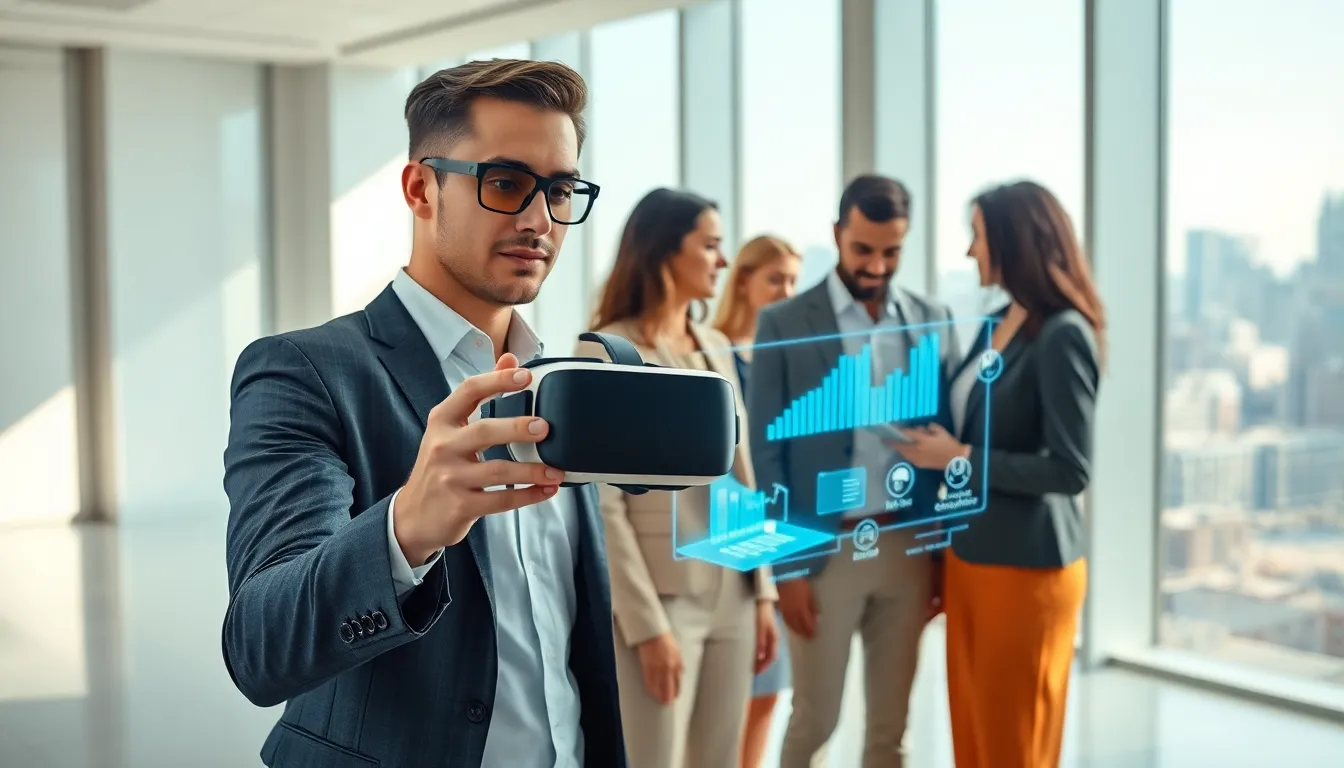
Remote collaboration tools have matured. Virtual meeting rooms let distributed teams work on shared documents and 3D models. Participants manipulate objects together regardless of physical location.
These virtual reality trends 2026 reflect VR’s transition from novelty to necessity. Enterprise buyers now expect proven ROI, and vendors are delivering measurable results.
Healthcare and Therapeutic Uses of VR
Medical applications highlight some of the most impactful virtual reality trends 2026. Healthcare providers use VR for treatment, training, and patient education.
Pain management programs show promising results. Burn victims report lower pain levels during wound care when distracted by VR environments. Chronic pain patients use VR meditation to reduce reliance on medication.
Mental health treatment has expanded significantly. Exposure therapy helps patients confront phobias in controlled virtual settings. PTSD treatment programs recreate triggering scenarios safely. Anxiety disorders respond well to VR-based cognitive behavioral therapy.
Surgical training benefits from realistic simulations. Medical students practice procedures repeatedly without risking patients. Experienced surgeons rehearse complex operations before entering the OR.
Physical rehabilitation uses gamified VR exercises. Stroke patients regain motor function through engaging activities. The technology tracks progress and adjusts difficulty automatically.
Patient education has improved too. Doctors show patients 3D models of their conditions. Visualizing a tumor’s location or understanding a surgical procedure reduces anxiety and improves compliance.
These virtual reality trends 2026 demonstrate VR’s potential to improve health outcomes. Insurance companies are beginning to cover VR-based treatments, expanding access to more patients.